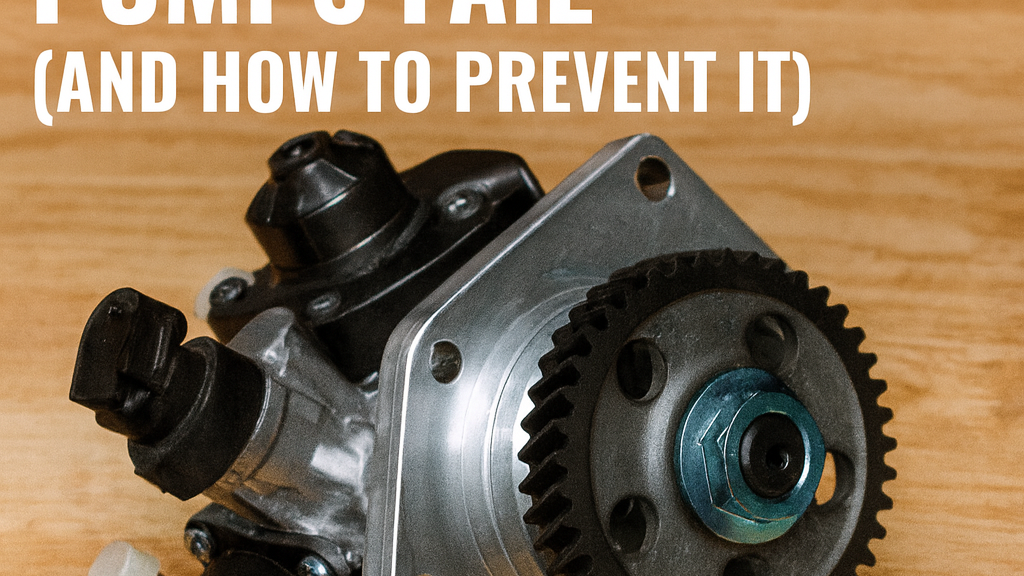
CP4 fuel pump failure causes and prevention in modern diesel trucks

Why CP4 Fuel Pumps Fail (and How to Prevent It)

The CP4 high-pressure fuel pump has become one of the most feared failure points in modern diesel trucks. When a CP4 pump fails, it can send metal particles throughout the entire high-pressure fuel system — damaging injectors, rails, lines, and the pump itself.

Repairs often climb into five-figure territory, making CP4 failure a nightmare scenario for diesel owners.

The good news? Most CP4 failures are preventable with proper fuel lubricity management and basic maintenance.

Read the rest of this entry >>


Ford F-350 Power Stroke towing a fifth-wheel camper with the text ‘Ford Power Stroke Engine Updates by Year (1994–Present)’ overlaid.

Ford Power Stroke Engine Updates by Year (1994–Present)

The Ford Power Stroke diesel family has powered Ford’s heavy-duty pickups and commercial trucks for more than 30 years. Across multiple generations, Power Stroke engines have delivered huge gains in horsepower, torque, emissions technology, and reliability.

From the legendary 7.3L to the modern 6.7L “Scorpion,” here is the full year-by-year evolution of the Power Stroke platform.

Read the rest of this entry >>
Cummins generations explained by year showing 6.7L engine updates from 2009 to 2025

6.7L Cummins Generations Explained: Engine Updates by Year (2009–2025)


The 6.7L Cummins turbodiesel has been the backbone of Ram heavy-duty trucks for more than a decade. As diesel competition intensified, Cummins introduced steady upgrades—boosting power, refining emissions systems, and strengthening internal components to support ever-increasing torque.

Below is a complete, year-by-year breakdown of 6.7L Cummins generations from 2009 through 2025, including power increases, emissions changes, and major mechanical updates.


Read the rest of this entry >>
White Chevrolet 2500HD driving through deep snow with overlaid text reading ‘Cold Weather Diesel Care’ and ‘Batteries, Fuel Gelling and DEF Explained’.

Why Diesel Engines Are Hard to Start in Cold Weather: Batteries, Fuel Gelling and DEF Explained

Cold weather affects diesel engines more severely than gasoline engines, and not just because of the engines themselves — which is important for buyers comparing used diesel trucks for sale in Texas that will be expected to start and perform reliably in winter conditions. By design, diesels require high compression, strong battery output, and precise fuel behavior to start reliably — all factors that become more challenging as temperatures drop.

Read the rest of this entry >>
White Ram 2500 hauling a large trailer down a highway with overlaid text reading ‘DEF Requirement Changes for U.S. Diesels’ and ‘2027 Update Explained’.

DEF Requirement Changes for U.S. Diesels (2027 Update Explained)

The EPA has officially eased several DEF-related requirements for U.S. diesel vehicles and equipment — and for diesel operators across the country, this is a long-awaited change. These updates matter not only to fleets and contractors, but also to buyers comparing used diesel trucks for sale in Texas, where emissions compliance and downtime directly affect long-term ownership costs.

Read the rest of this entry >>