

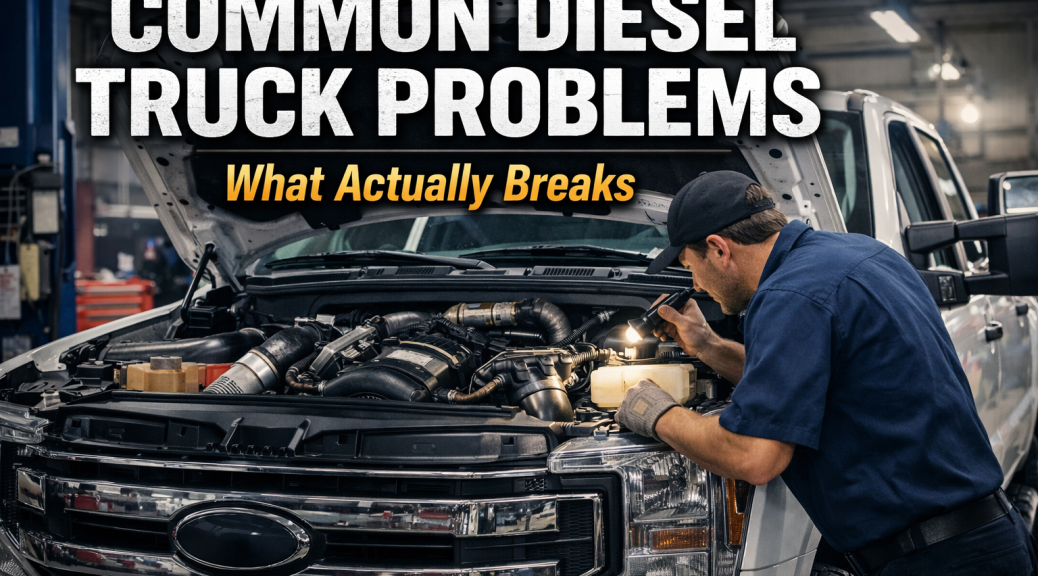
Diesel trucks have a reputation for durability—and for good reason. Cummins, Duramax, and Power Stroke engines are built to last hundreds of thousands of miles when maintained properly. But in the real world, no diesel is perfect.
At North Texas Truck Stop, we see these trucks every day—on the lot, in reconditioning, and coming back from long-term ownership. And the truth is, most diesel problems aren’t random—they follow predictable patterns.
If you understand what actually breaks (and why), you can avoid the expensive mistakes most buyers make.
1. Fuel System Problems (Injectors, Pumps, Contamination)
This is the #1 category of diesel failures—across all three platforms.
Modern diesel fuel systems operate at extremely high pressure, and even small contamination can cause major damage.
What goes wrong:
– Injector failure (especially early Duramax LB7 models)
– CP4 fuel pump failure (Ford, GM, and some newer Cummins)
– Contaminated fuel damaging the entire system
The CP4 pump in particular is one of the most expensive failures we see—it can send metal through the entire fuel system and turn a repair into a full replacement job.
What this means for buyers:
Fuel system repairs are some of the most expensive diesel repairs you can face. Maintenance history matters more than mileage here.
👉 For a breakdown of real ownership costs, see our guide: Duramax vs Cummins vs Power Stroke Maintenance Costs
2. Emissions System Issues (DPF, DEF, EGR)
Modern diesels are clean—but that complexity comes at a cost.
DPF (Diesel Particulate Filter), DEF (Diesel Exhaust Fluid), and EGR systems are responsible for a large percentage of real-world diesel issues.
What goes wrong:
– DPF clogging from short trips or excessive idling
– DEF system sensor failures
– EGR valve and cooler issues (more common on certain Power Stroke models)
What this means for buyers:
Driving habits matter. A diesel used for short trips is far more likely to have emissions problems than one used for highway driving or towing.
👉 If you’re not clear on how these systems work, read: DEF System Deep Dive
3. Turbocharger Problems
Turbochargers are essential to diesel performance—but they don’t last forever.
What goes wrong:
– Variable geometry turbo (VGT) sticking or actuator failure
– Boost leaks or worn seals
– Carbon buildup from low-load driving
These issues show up more often in trucks that are driven lightly or rarely worked hard.
What this means for buyers:
A truck that’s been used for towing or highway driving is often healthier than one used only for short trips.
4. Transmission Stress & Drivetrain Wear
Diesel engines produce massive torque—and that torque puts stress on transmissions and driveline components.
What goes wrong:
– Transmission wear from towing or tuning
– Torque converter issues
– Driveline vibration or wear over time
Not all platforms are affected equally, but heavy use without proper maintenance can accelerate wear.
What this means for buyers:
Look beyond the engine. A strong diesel paired with a worn transmission can become an expensive ownership experience quickly.
5. Electrical & Sensor Failures
Modern diesel trucks rely heavily on sensors, modules, and electronics.
What goes wrong:
– NOx sensors and DEF-related sensors failing
– Wiring or module issues
– Random warning lights or limp mode events
These issues are usually not catastrophic—but they can be frustrating and expensive to diagnose.
What this means for buyers:
Expect occasional electronic repairs on modern diesels. This is part of ownership, not a sign of a bad truck.
What This Means If You’re Buying a Used Diesel Truck
Here’s the key takeaway: every diesel platform has known problem areas—but none of them are deal-breakers if you understand what to look for.
What matters most is:
– Maintenance history
– Previous use (towing vs short trips)
– How the truck was driven and cared for
👉 If you’re comparing reliability across platforms, start here: Most Reliable Used Diesel Trucks in 2026
👉 If you’re focused on Duramax specifically, see: Best Used Duramax Trucks to Buy
How to Avoid These Problems
You can’t eliminate risk—but you can dramatically reduce it.
– Buy from a dealer that understands diesel trucks
– Avoid trucks with unknown or inconsistent maintenance history
– Look for highway-driven or work-used trucks over short-trip vehicles
– Stay on top of fuel filters, oil changes, and emissions system care
Most major diesel problems don’t happen overnight—they develop over time due to neglect or improper use.
Frequently Asked Questions
What is the most common diesel truck problem?
Fuel system issues (injectors and high-pressure pumps) and emissions system problems (DPF/DEF) are the most common across all diesel platforms.
Are diesel trucks expensive to repair?
They can be. Repairs are often more expensive than gas trucks, but diesel engines typically last longer when maintained properly.
Which diesel engine has the least problems?
All three—Cummins, Duramax, and Power Stroke—are reliable when maintained. The difference comes down to specific model years and how the truck was used.
What mileage do diesel trucks start having problems?
Many diesel trucks begin to show wear-related issues after 150K–200K miles, but well-maintained trucks can go far beyond that.
Is it risky to buy a high-mileage diesel truck?
Not necessarily. A well-maintained high-mileage diesel can be a better buy than a low-mileage truck with poor maintenance or heavy short-trip use.
View Diesel Inventory: diesel trucks for sale in Texas
View All Inventory: browse all available trucks
Financing Options: diesel truck financing
Nationwide Shipping: truck shipping and delivery
Want to see real trucks before you buy? Watch diesel truck walkaround videos