

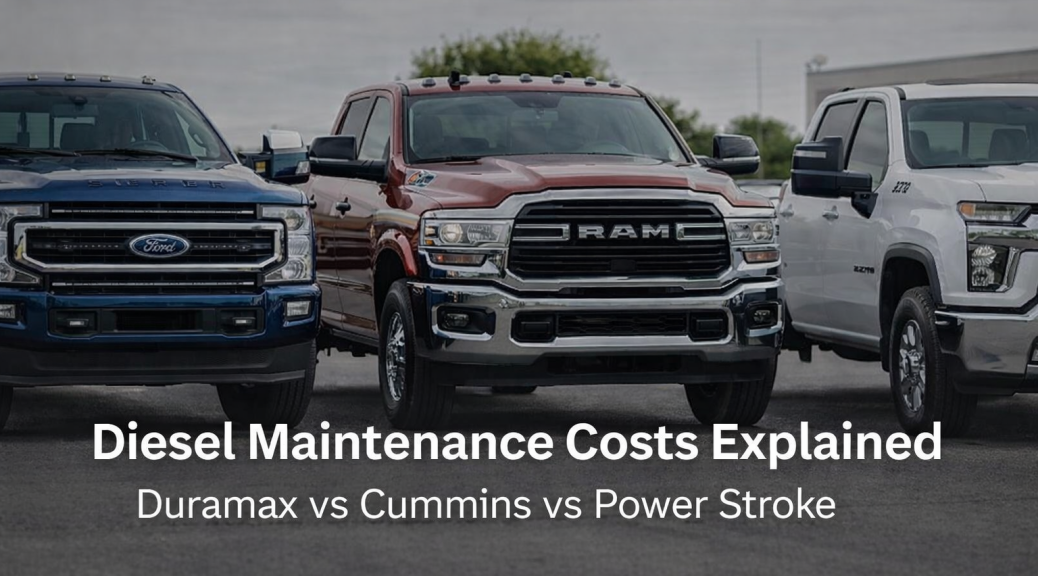
One of the biggest questions diesel truck buyers ask is simple: which diesel truck costs the least to maintain? If you are comparing a Duramax, Cummins, and Power Stroke, the honest answer is that none of them are “cheap” in the way a half-ton gas truck is cheap. But that does not mean they are bad ownership decisions. It means you need to understand where the costs actually come from, which problems are more common on certain platforms, and why maintenance history matters more than brand loyalty.
At North Texas Truck Stop, we spend a lot of time around used heavy-duty diesel trucks, and what we see in the real world is this: ownership cost is usually driven less by the badge on the hood and more by how the truck was used, maintained, and equipped. A well-kept Duramax can be less expensive to own than a neglected Cummins. A properly maintained Power Stroke can make more sense than a cheaper truck with deferred repairs. That is why buyers need to look past internet arguments and focus on real ownership patterns.
If you are still comparing the three major diesel platforms at a high level, start with our Cummins vs Duramax vs Power Stroke comparison guide. This article goes deeper on the maintenance cost side of the decision.
What “Maintenance Cost” Really Means on a Used Diesel Truck
When people talk about maintenance cost, they often lump everything together. That creates confusion. On a modern used diesel truck, ownership cost usually falls into a few different categories:
– Regular maintenance like oil changes, fuel filters, transmission service, coolant service, and brake work
– Wear items such as tires, batteries, suspension parts, and front-end components
– Emissions-related maintenance involving the DPF, DEF system, EGR system, sensors, and regeneration behavior
– Major repairs involving fuel systems, turbos, injectors, transmission issues, or high-pressure components
– Usage-related costs that depend on towing, idling, short-trip driving, and overall workload
That last part matters more than many buyers realize. A diesel truck that spent its life towing on the highway may actually be easier to live with than one that spent years on short local trips. If you have not read it yet, our guide on how long diesel trucks last helps explain why lifespan and maintenance cost are so closely tied to use case.
General Cost Pattern: Which Platform Is Usually Cheapest to Maintain?
In broad terms, buyers often see ownership cost shake out like this:
– Cummins: often viewed as the simplest long-term ownership proposition, especially by buyers who value engine reputation and service familiarity
– Duramax: often balanced in overall drivability and ownership experience, but repair costs can rise quickly when certain major components fail
– Power Stroke: can be excellent trucks, but some generations and repair categories tend to make buyers more cautious about long-term cost exposure
That does not mean one is always cheap and another is always expensive. It means each platform has different cost tendencies.
Duramax Maintenance Costs: Smooth Ownership, But Major Repairs Can Get Expensive
Duramax trucks are popular for a reason. They drive well, tow confidently, and many owners love the overall refinement. In day-to-day ownership, a well-maintained Duramax often feels like a balanced heavy-duty truck. But from a cost standpoint, the key issue is this: when something major goes wrong, it can get expensive quickly.
That does not mean Duramax trucks are unreliable. In fact, some are among the most desirable used diesel trucks on the market. We break down the strongest examples in our guide to the best used Duramax trucks to buy. The point here is that buyers should budget realistically. Regular maintenance is manageable, but repairs involving emissions equipment, fuel system components, or major drivetrain items can change the ownership picture fast if a truck was neglected.
Real-world Duramax ownership usually rewards buyers who purchase the right truck upfront instead of trying to “save money” on a rough one. A cleaner truck with documented service history will often be cheaper to own over time than a lower-priced example that needs deferred work.
Cummins Maintenance Costs: Often Straightforward, But the Rest of the Truck Still Matters
Cummins trucks have a strong reputation because many buyers trust the engine’s long-term durability. That reputation is not accidental. Cummins-powered trucks are often seen as solid long-haul ownership candidates, especially for people who prioritize mechanical confidence and towing use.
From a maintenance-cost perspective, Cummins trucks are frequently attractive because buyers feel the engine itself is a known quantity. But there is an important reality check here: you are not buying only an engine. You are buying the full truck, including transmission, front-end wear, electronics, emissions equipment, and the history of how it was used.
That is why buyers sometimes over-focus on the Cummins name and under-focus on the condition of the truck around it. The maintenance story is never just “Cummins equals cheap.” A strong engine platform can still be attached to a truck with expensive ownership needs if maintenance was poor or the vehicle was worked hard without proper care.
Power Stroke Maintenance Costs: Strong Capability, But Buyers Need to Be More Selective
Power Stroke trucks can be outstanding tow vehicles and strong ownership choices, especially in the right years and configurations. But when buyers talk about Power Stroke maintenance costs, the conversation usually becomes more generation-sensitive. Some trucks are much more attractive than others, and the wrong one can create more anxiety around repair exposure.
That is why selectivity matters so much with Power Stroke ownership. If a buyer chooses a strong example with a clean service history, maintenance cost may be completely reasonable for a heavy-duty diesel. But if a buyer shops purely on price and ignores the truck’s history, the ownership experience can feel much more expensive than expected.
This is also why broad “which diesel is cheapest?” discussions can miss the point. On used trucks, the difference between a smart purchase and a costly purchase often comes down to condition, prior use, and inspection quality more than the logo on the tailgate.
The Hidden Cost Driver on All Three: Emissions Systems
If you are shopping a modern used diesel truck, one of the biggest cost variables is not Duramax vs Cummins vs Power Stroke by itself. It is how healthy the emissions system is.
Modern diesel ownership involves components like the DPF, DEF system, EGR system, sensors, and regeneration cycles. When these systems are working properly, ownership can be very manageable. When they are ignored, mismatched to the owner’s use pattern, or already showing symptoms, maintenance costs can rise quickly.
If you are newer to the topic, read our DEF system deep dive and our guide to proper DPF maintenance. Those two articles explain why some buyers think modern diesels are “expensive,” when the real issue is often that the truck’s use case and maintenance history were never a good fit.
We also recommend reading our article on DEF and diesel rules if you are sorting through internet confusion about emissions, compliance, and what actually matters as a buyer in 2026.
Short Trips, Neglect, and Deferred Maintenance Usually Cost More Than the Brand Choice
Here is the part many buyers do not want to hear: the most expensive diesel truck to own is usually not the one with the “wrong” brand. It is the one that was used incorrectly or maintained poorly.
A truck that spent years doing short trips, infrequent towing, long idle time, and inconsistent service can become a far more expensive ownership proposition than a higher-mile truck that was used correctly and maintained on schedule. That is why maintenance records, condition, underhood cleanliness, warning signs, and overall truck presentation matter so much.
This is one reason our most reliable used diesel trucks guide is focused not just on brand reputation, but on which trucks make the most sense to buy in the real world. Reliability and maintenance cost are connected, but they are not always identical. A “reliable” platform can still become costly if the truck was neglected.
What Buyers Should Budget For on Any Used Diesel Truck
If you are stepping into used diesel ownership, your mindset should be realistic, not fearful. These trucks are built for serious work, but they are also more complex than lighter-duty gas vehicles. A buyer should expect ongoing upkeep and avoid treating a diesel truck like a no-maintenance purchase.
At a minimum, owners should expect to stay ahead on:
– Oil and filter service
– Fuel filters
– Transmission and cooling system service
– Batteries and charging system health
– Tire and suspension wear
– Brake service
– Emissions system awareness and proper driving patterns
The goal is not to assume constant major repairs. The goal is to understand that a used diesel truck rewards proactive ownership. Buyers who budget for regular maintenance usually have a better experience than buyers who stretch for the purchase and hope nothing comes up.
Why Dealer Preparation Matters More Than Most Buyers Realize
This is where dealership quality matters. On paper, two used diesel trucks can look similar. In the real world, one may have been properly evaluated, serviced, road-tested, and prepared, while the other is simply being retailed as-is with minimal scrutiny.
That difference affects maintenance cost after purchase.
We have written about how we evaluate used diesel trucks before they go on the lot and what buyers should look for during the shopping process. We have also explained the NTTS Reconditioning Standard, because preparation is part of ownership value. A truck that has been thoughtfully inspected and presented gives buyers a much stronger starting point than one sold with unanswered questions.
So Which Diesel Truck Is Cheapest to Maintain?
If we are being practical, the answer is this:
– Cummins often appeals to buyers who want perceived long-term simplicity and engine reputation
– Duramax often offers a strong all-around ownership experience, but buyers should respect the cost of major repairs if maintenance history is weak
– Power Stroke can be a strong choice, but buyers need to be more selective about year, condition, and service history
For most buyers, the cheapest diesel truck to maintain is not determined by internet brand loyalty. It is the truck that was bought carefully, inspected correctly, and matched to the owner’s real use case.
Final Take
If you are comparing Duramax vs Cummins vs Power Stroke maintenance costs, do not focus only on the engine badge. Focus on the truck’s history, emissions health, workload, inspection quality, and overall condition. Those factors often determine what you actually spend far more than a simple brand ranking.
A well-bought diesel truck can still be an excellent long-term ownership decision in 2026. But the right purchase usually comes from disciplined shopping, realistic expectations, and choosing a truck that has been evaluated properly before it ever reaches your driveway.
If you are actively shopping, you can browse diesel trucks in our inventory, review financing options, or learn more about nationwide shipping.
Frequently Asked Questions About Diesel Truck Maintenance Costs
Which diesel truck is cheapest to maintain?
There is no single cheapest diesel truck across all situations. Many buyers lean toward Cummins-powered trucks for perceived long-term simplicity, but real maintenance cost depends more on how the truck was used, maintained, and inspected before purchase. A well-maintained Duramax or Power Stroke can be less expensive to own than a neglected Cummins.
Are Duramax trucks expensive to maintain?
Duramax trucks are generally manageable in day-to-day maintenance, but repair costs can increase when major components fail. Buyers should focus on service history and overall condition, as those factors often matter more than the platform itself.
Do Cummins trucks cost less to maintain than other diesels?
Cummins trucks are often seen as a straightforward long-term ownership option, especially for buyers focused on engine durability. However, maintenance cost still depends on the condition of the entire truck, not just the engine. Transmission, suspension, and emissions systems all contribute to ownership cost.
Are Power Stroke trucks expensive to maintain?
Power Stroke maintenance costs vary significantly by generation and condition. A well-selected, properly maintained truck can be very reasonable to own, but buyers need to be more selective and pay close attention to service history.
What is the most expensive part of owning a diesel truck?
The most expensive ownership costs usually come from major repairs or neglected maintenance, especially involving emissions systems, fuel systems, or drivetrain components. Regular maintenance and proper use can significantly reduce long-term costs.
Do diesel trucks cost more to maintain than gas trucks?
In general, diesel trucks have higher maintenance and repair costs than gas trucks due to their complexity and heavy-duty design. However, they are built for towing, longevity, and workload, which can make them a better long-term value for the right owner.
How can I reduce diesel truck maintenance costs?
The best way to reduce maintenance costs is to buy the right truck upfront. Look for strong service history, proper use, and a clean inspection. Staying consistent with maintenance and using the truck appropriately for its intended purpose also helps prevent costly issues.
Browse Diesel Trucks: https://www.northtexastruckstop.com/trucks-for-sale-in-mansfield-tx?isNew=0
Financing Options: https://www.northtexastruckstop.com/diesel-truck-financing-mansfield-tx
Nationwide Shipping: https://www.northtexastruckstop.com/truck-shipping-delivery-mansfield-tx