

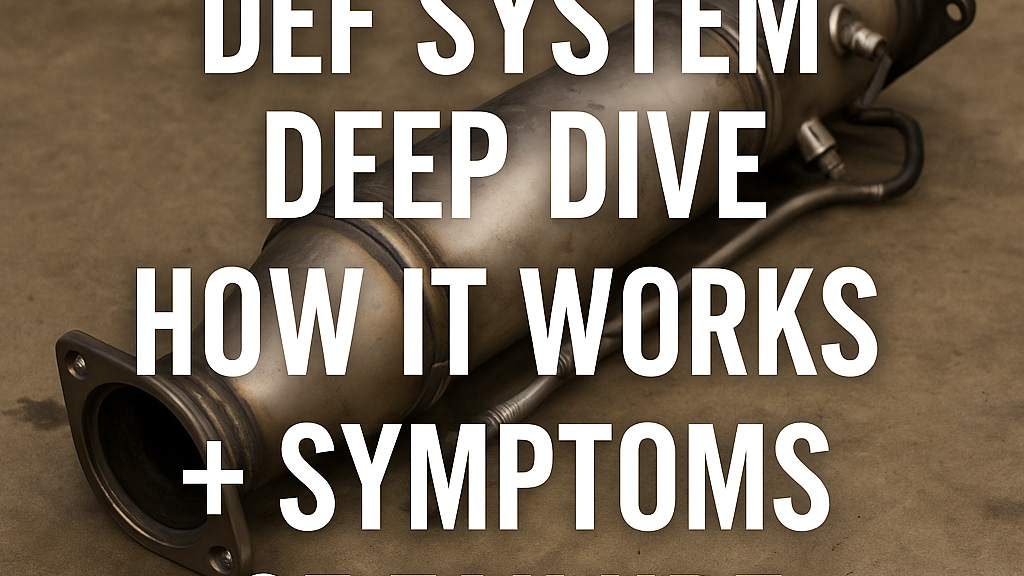
Diesel Exhaust Fluid (DEF) isn’t optional anymore — it’s the backbone of every modern diesel truck on the road. Whether you’re running a Power Stroke, Duramax, or Cummins, the DEF system controls emissions, protects your aftertreatment, and keeps your truck out of limp mode. When it works, you barely notice it. When it fails, you feel it fast.
This guide breaks down how DEF actually works, why failures happen, and the real symptoms that tell you something’s going wrong — NTTS style: clear, practical, and built from real-world diesel experience.
How the DEF System Works
The DEF system is designed to reduce NOx emissions by injecting a urea-based fluid into the exhaust stream. That fluid mixes with hot exhaust inside the SCR (Selective Catalytic Reduction) chamber, breaking harmful gases down into harmless nitrogen and water vapor.
The major DEF system components include:
– DEF tank – DEF pump – DEF injector (doser) – SCR catalyst – NOx sensors (pre-SCR and post-SCR) – Heater elements (inside tank + lines) – DEF quality sensor (newer platforms)
Together, these parts keep emissions in check and communicate constantly with the truck’s ECM. If one piece goes offline, the entire system reacts — usually with warnings, codes, and reduced power.
Why DEF System Failures Happen
Modern DEF systems are sensitive. They’re accurate, efficient, and extremely picky. A small issue anywhere in the chain can trigger a warning or force the truck into limp mode to protect the aftertreatment system.
The most common causes include:
– Contaminated or expired DEF – Crystallization in the injector or lines – Failed NOx sensors – Faulty DEF pump – Cracked or frozen DEF tank (cold climates) – Bad heater element inside the tank – Electrical connection corrosion
The system is designed to be proactive — meaning it alerts you long before damage happens. But if ignored, simple warnings turn into “speed limited” messages and eventually a forced countdown to 5 mph.
Early Symptoms of DEF System Problems
Small signs can show up days or weeks before a full failure. Catching these early saves time, money, and downtime.
Watch for these early indicators:
– “Incorrect DEF Quality” message – “Service Exhaust Fluid System” warning – Slow DEF level changes or inaccurate readings – Increased DEF consumption – Strong ammonia smell from exhaust – Check engine light tied to NOx sensor codes
These symptoms usually point to a sensor or injector issue — the most common failure points across Ford, GM, and Ram platforms.
Advanced Symptoms — When a DEF Failure Is Imminent
When the system can’t correct the issue, the truck begins protecting itself. These are signs the truck is entering a restricted state.
Critical symptoms include:
– “Speed Limited Soon” or “65 mph Max Speed” warning – Exhaust fluid pressure codes – Crystallized DEF buildup around the injector – Inability to clear messages after refilling DEF – Repeated NOx sensor faults – Countdown warning (toward 5 mph limit)
Once the countdown begins, you’re not bypassing it. The truck will ultimately limit you to 5 mph until the root issue is repaired and cleared.
How to Prevent DEF System Problems
Simple steps go a long way in keeping the system healthy.
– Use fresh, name-brand DEF only – Avoid storing DEF in extreme heat – Keep the tank above ¼ full in winter – Clean around the cap before refilling – Don’t let DEF sit for more than 6–12 months – Inspect for white crystallization at service intervals
Most DEF problems come from quality issues, crystallization, or sensor failure — all preventable or easy to catch early.
Is Deleting the DEF System Worth It?
Modern trucks are engineered as complete emissions systems. While deleting may seem like a shortcut, it brings serious downsides:
– Federal fines for emissions tampering – Warranty void – No inspection compliance in most states – Lower resale value on clean-title trucks
Today’s emissions systems are far more reliable than early-generation designs. Proper maintenance beats deletion every time for long-term ownership.
Final Thoughts
The DEF system is complex — but when you understand how it works and what symptoms to look for, you can prevent most failures before they shut down your truck. DEF issues don’t mean your diesel is unreliable; they mean the system is doing its job.
If you’re buying, selling, or maintaining a modern diesel, knowing the DEF system gives you an edge — and we’re here to help with that every day.
— North Texas Truck Stop
Your Diesel Headquarters
For official guidance on DEF quality standards, visit the American Petroleum Institute’s DEF resource page.
For more diesel system insights, check out our Diesel Regeneration Guide.