

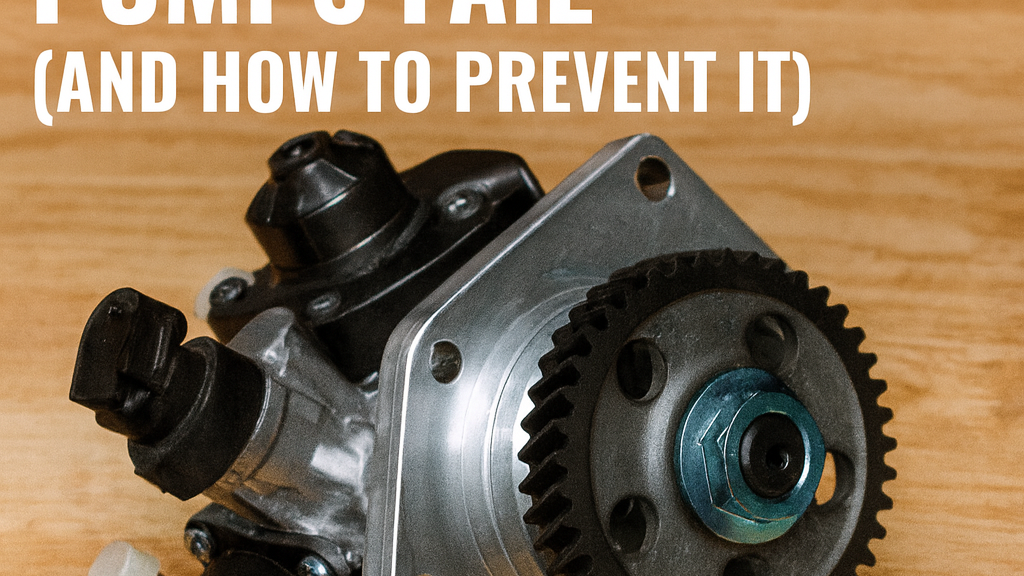
Why CP4 Fuel Pumps Fail in Modern Diesel Trucks
The CP4 high-pressure fuel pump has become one of the most feared failures in modern diesel engines. When a CP4 pump fails, it can send metal particles through the entire high-pressure fuel system, damaging the injectors, rails, pump, and lines. Repairs often climb into five-figure territory, making CP4 failure a nightmare scenario for diesel owners.
The good news? Most CP4 failures are preventable with proper maintenance and fuel-lubricity management.
The Real Reason CP4 Pumps Fail
CP4 pumps can fail for a few reasons — air in the fuel, water contamination, or internal wear — but the #1 cause is:
❗ Insufficient lubrication inside the pump
When lubrication drops below safe levels, metal-to-metal contact increases across internal components. As the internal cam, plungers, and rollers start to wear, they shave off microscopic metal particles. Those particles circulate throughout the high-pressure system and trigger a chain reaction:
- CP4 internal wear
- Metal contamination
- Injector damage
- Fuel rail and line contamination
- Full-system failure
Once this cycle begins, the only repair is replacing the entire high-pressure fuel system, often requiring cab removal on certain trucks.
Why U.S. Diesel Fuel Makes the Problem Worse
The core issue isn’t the design of the CP4 pump alone — it’s the fuel we’re required to use.
Ultra-Low Sulfur Diesel (ULSD)
U.S. diesel is mandated to meet ULSD standards. While low sulfur content helps protect DPF systems and reduce emissions, sulfur also provided natural lubricity for fuel-system components.
With sulfur largely removed, ULSD is much less lubricating, and CP4 pumps rely heavily on fuel lubricity to survive.
Lower lubricity = higher friction = higher wear.
This is why CP4 failures are far more common in the U.S. compared to countries that still allow diesel with higher natural lubricity.
Do Diesel Additives Help? Yes — If You Use the Right One
With so many diesel additives on the shelves, it’s hard to know what’s useful and what’s snake oil. In this case, fuel lubricity additives are genuinely effective at reducing CP4 failure risk.
Here’s what to look for:
✔ Choose a DPF-compatible lubricant additive
Not all additives are safe. Some contain ingredients that can coat or damage DPFs.
✔ Add the treatment before you fill the tank
This ensures proper mixing.
✔ Use it consistently
A CP4 pump with thousands of miles of poor-lubricity fuel may already be compromised. Additives can’t reverse internal damage — but they can slow or prevent further wear.
✔ Look for HFRR improvement numbers
Additives that reduce HFRR wear scar values to below 460 microns provide effective pump protection.
According to the ASTM diesel fuel lubricity standard,
https://www.astm.org/d975-21.html
Other Factors That Can Cause CP4 Failure
While lack of lubricity is the biggest culprit, other contributing factors include:
Air in the fuel
Can disrupt lubrication and increase internal friction.
Water contamination
Water entering the pump can cause catastrophic internal scoring.
Dirty or low-quality fuel
Increases wear and promotes contamination.
Extended dry cranking
Engines cranked with low fuel pressure or after filter changes can starve the pump of lubrication.
Being mindful of these issues goes a long way toward protecting your high-pressure system.
How to Prevent CP4 Pump Failure (Simple Steps That Work)
✔ Use a quality, DPF-safe lubricity additive in every tank
The cheapest insurance you can buy.
✔ Change fuel filters on time — or early
Filters protect the pump from debris and water.
✔ Avoid running the fuel tank low
A low tank increases the risk of air ingestion and hotter fuel temps.
✔ Buy fuel from high-turnover stations
Fresh diesel = stable lubricity and less contamination.
✔ Drain water separators regularly
Water is the enemy of every high-pressure fuel system.
If you maintain your diesel properly, CP4 failure becomes highly unlikely.
Final Thoughts: The CP4 Pump Doesn’t Have to Be a Diesel Owner’s Nightmare
It’s true — CP4 pump failure can be catastrophic and expensive. But with the right additives, maintenance, and fuel habits, diesel owners can dramatically reduce the risk.
You don’t have to fear the CP4 pump.
You just need to give it the lubrication it was designed to have.
For diesel owners concerned about emissions-related failures, you may also find our DEF System Deep Dive helpful.
Link:
https://www.northtexastruckstop.com/blog/def-system-how-it-works-symptoms-of-failure
FAQ
What causes CP4 fuel pump failure?
The most common cause is insufficient lubrication due to Ultra Low Sulfur Diesel (ULSD), which increases internal wear. Air in the fuel, water contamination, and dirty filters can also contribute. CP4 fuel pump failure is extremely common in modern diesels because the pump relies heavily on fuel lubricity to prevent internal wear.
Can CP4 failure be prevented?
Yes. Using a DPF-safe lubricity additive, changing fuel filters on time, and avoiding low fuel levels greatly reduce failure risk.
Why is CP4 failure so expensive?
When a CP4 pump wears internally, metal particles contaminate the entire fuel system. This often requires replacing injectors, rails, pump, and lines—creating a five-figure repair.
Will additives fix a damaged CP4?
Additives cannot repair existing wear. They can only prevent further damage if the system is still healthy.
Browse Diesel Trucks | Financing Options | Nationwide Shipping